
Ali Khamenei is Dead
An Obituary

What a week. The Pentagon barred the use of Anthropic and labeled it a supply-chain threat. Ali Khamenei is dead. The U.S. and Israel are one day into a military operation aimed at regime change. And it is the fourth anniversary of Russia’s “three-day” Special Military Operation in Ukraine. With everything going on, it’s honestly hard to keep track of everything I want to write about, should write about, and should not write about. Today, I think it is worth spending time on Ali Khamenei death, and how he came to power.
Ali Khamenei
He was a thug. That is as plain and simply as I can put it. Ali Khamenei was a man who rose to the most prominent role in Iran through graft and corruption. He was eminently unqualified to lead Iran under the Velayat-e Faqih (Guardianship of the Jurist). And his death, at the hand of U.S. and Israel munitions is only a shame in that he was not hauled before a court filled with the families of protestors he ordered the military and Revolutionary Guard Forces to murder. Understanding how Khamenei, Iran, and the world got here is important.
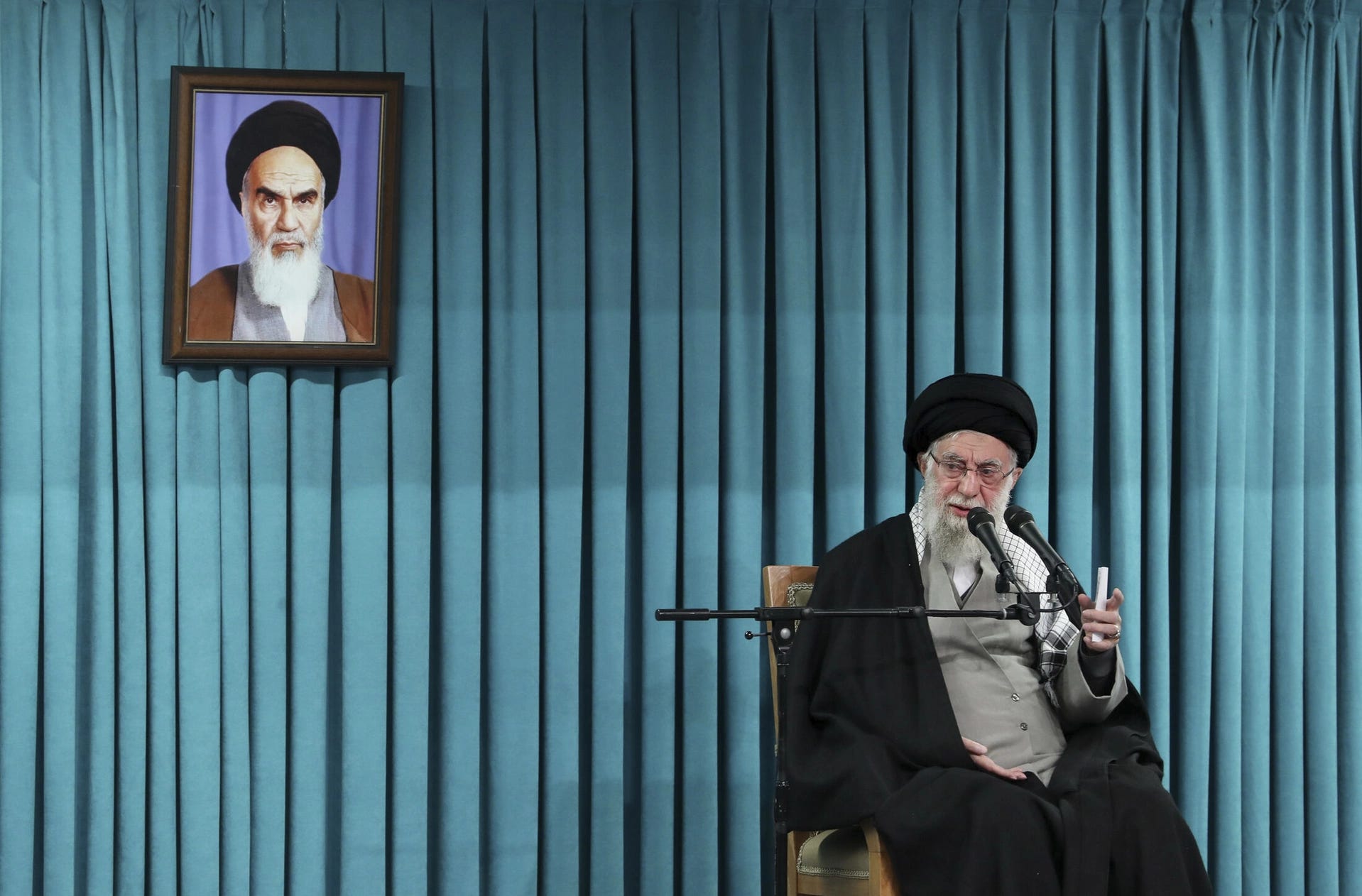
In 1979, as protests spread in Iran and the Shah fled, Khomeini returned from exile in Paris (a “hardship” exile, really). Over the course of the Iran–Iraq War, he consolidated power and drafted the constitution that governs Iran to this day. That constitution spelled out the requirements to become the Supreme Leader of Iran, the Vali-e Faqih, the country’s religious and political authority.
To become Supreme Leader under the 1979 Constitution, a scholar needed deep jurisprudential standing (ijtihad). This is more than being a pious Shi’a. It implies a serious body of work—issuing fatwas (religious rulings) across a wide range of subjects. As one example, Iraqi Ayatollah Ali al-Sistani has thousands of rulings available on his website. These ruilings range from questions over prayer and finance to questions as specific as whether you can use perfume that contains alcohol. Whatever one thinks of the man, that’s what a deep jurisprudential record looks like.
This also described Khomeini. Despite his post-revolutionary murderous bent and totalitarian streak, he had deep knowledge and a substantial body of work in Shi’a religious and social law. The constitutional requirement was not accidental. He wrote the constitution so that the role of Supreme Leader fit him. This is almost the inverse of Henry VIII declaring himself head of the Church of England: the head of Iranian Shi’a religious authority named himself king.
What about Ali Khamenei? Was he, as Article 107 of the 1979 Constitution requires, “the most knowledgeable” Shi’a scholar in Iran across issues of faith, social questions, and politics? Resoundingly, no. So much so, in fact, that in 1989 there was a constitutional amendment to lower the bar. Maybe the Assembly believed Khamenei would grow into the position, but he did not. He went on to do embarrassing things like announce the end of Ramadan on the wrong day. The cleric who arguably should have gotten the nod was Hossein Montazeri.
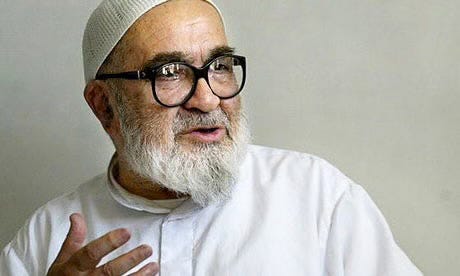
Montazeri was a true believer as a younger man. He spent six years in prison under the Shah’s government. By 1980, he was clearly Khomeini’s heir and partner. From 1980 to 1988, through the Iran–Iraq War, Montazeri was steadfast. Then, in 1988, Khomeini ordered “Death Commissions” to execute political prisoners. These commissions oversaw the execution of roughly 30,000 political prisoners. Montazeri, the designated heir, told the Tehran “Death Commission” that “the greatest crime in the Islamic Republic, for which history will condemn us, has been committed by you.” He also wrote a series of letters to Khomeini opposing the executions, going so far as to ask him to spare women and children. For his humanity, Khomeini placed Montazeri under house arrest, where he remained until his death in 2009. (Please, take the time to read more about this here.)
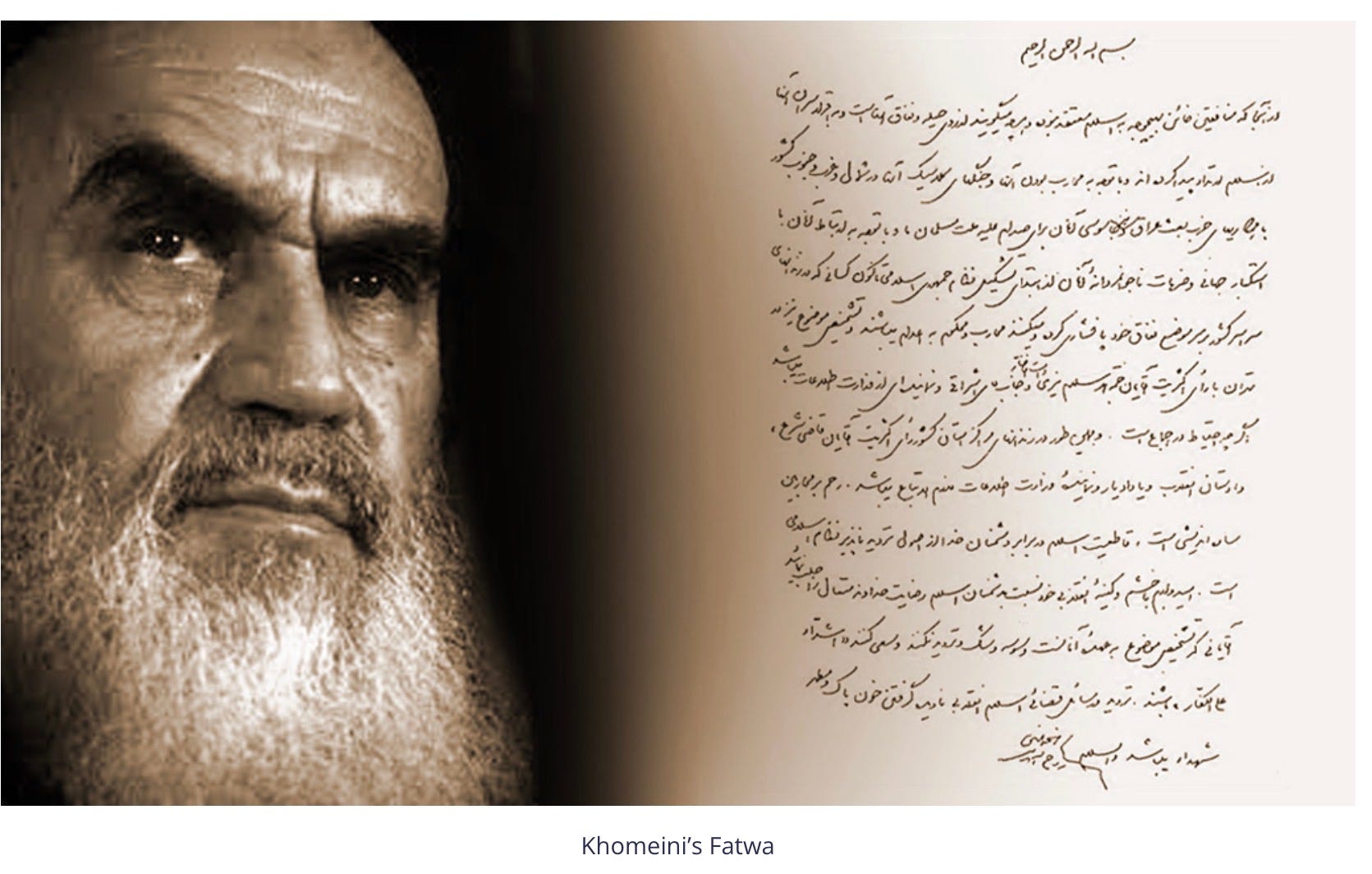
So how did Ali Khamenei get the job? One man: “The Shark,” Ali Rafsanjani. Rafsanjani was a cleric, opposed the Shah in 1963, and studied under Khomeini. He was also repeatedly, and credibly, accused of corruption. He did not rise to challenge the “Death Commissions” in 1988. And, most importantly for our purposes, he was singularly responsible for legitimizing Khamenei. Rafsanjani claimed Khomeini appointed Khamenei as his heir on his deathbed, as a final act. The Shark was a survivor. He took this chance to put someone with limited ability and network into a position of power, with the hopes that he could control him.
Late in life, Rafsanjani came to regret his actions. As Khamenei built a power base with the Revolutionary Guard and the Basij (a militia used to beat protesters), Rafsanjani became a rival. When Rafsanjani died in 2017, one of his sons was in prison for financial crimes.
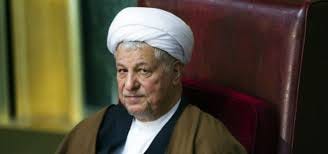
As I said: Ali Khamenei was a thug. This is the most fitting obituary I could write for him. Since becoming Supreme Leader, Khamenei oversaw kidnappings, murders, and brutal suppression of protests. He enriched himself and his family while ordinary Iranians grew poorer. The videos of Iranians in Iran and around the world celebrating his death are not evidence of glib or murderous people; they are celebrations of the possibility of starting over.
I may not agree with how the U.S. arrived at the use of force, but the world, and Iran, could be much better off if this ends the right way. I hope that is how this ends
I can only sit here and wonder what that Iranian couple we met are doing right now.....I imagine celebrating.
Iranians everywhere are celebrating what could be an end to years of the most brutal oppression in recent history. The regime responsible for killing my friends in 2006-2009 may finally be toppled.
I’m cautiously optimistic, but concerned about 2nd & 3rd order effects in the region, and precedents set in foreign policy.